sales@martinskiphire.co.uk


A 6-yard skip is one of the most commonly hired skip sizes in the UK, particularly for renovation work, building projects and heavier household waste. Often referred to as a builder’s skip, it’s large enough for substantial amounts of rubbish without being oversized for a standard driveway.
The average 6-yard skip measures around 3.4 metres long, 1.7 metres wide and 1.2 metres high, with enough space for roughly 50 to 60 bin bags of waste.
In this guide, we’ll break down the exact dimensions of a 6-yard skip, what it can hold, how it compares to other skip sizes and whether it’s the right skip hire choice for your project.
6-Yard Skip Dimensions
A standard 6-yard skip typically measures:
| Measurement | Approximate Size |
|---|---|
| Length | 3.4 metres / 11 feet |
| Width | 1.7 metres / 5.5 feet |
| Height | 1.2 metres / 4 feet |
| Capacity | 6 cubic yards / approximately 4.6m³ |
| Bin Bag Equivalent | Around 50–60 black bags |
Although dimensions can vary slightly between skip manufacturers, these measurements are considered standard across most UK skip hire companies.
What Does a 6-Yard Skip Actually Look Like?
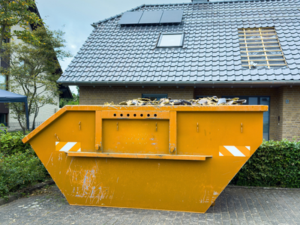
A 6-yard skip is large enough to handle substantial amounts of waste without taking up excessive space outside your property. It’s commonly seen on residential driveways, renovation projects and building sites because it offers enough room for bulky waste while still remaining practical for domestic use.
Compared to a smaller 4-yard skip, the extra depth and length are immediately noticeable. Many customers underestimate how much additional waste a 6-yard skip can hold until they begin loading it properly.

For most homes, a standard-sized 6-yard skip will fit comfortably on a driveway, although access can sometimes be more restricted on narrow roads or terraced streets.
Why Is It Called a Builder’s Skip?
The 6-yard skip has become known as the “builder’s skip” because it’s one of the most widely used skip sizes across construction and renovation projects.
It’s particularly popular for heavier waste such as:
- • bricks and rubble
- • plasterboard and tiles
- • soil and hardcore
- • timber and mixed builders’ waste
Unlike larger skips, a builder’s skip is often better suited to dense materials because it’s less likely to exceed transport weight limits once fully loaded.
What Can Fit Into a 6-Yard Skip?
A skip of this size can handle far more waste than many people expect. For most homeowners, it’s large enough for:
- • a full bathroom renovation
- • a kitchen refurbishment
- • a medium-sized garden clearance
- • decking or fencing removal
- • bulky mixed household waste
Builders also regularly use 6-yard skips for renovation work because they provide a good balance between capacity and practicality. Materials such as broken bathroom suites, old cabinets, timber, flooring and paving slabs can usually be loaded comfortably without wasting space.
How Many Bin Bags Fit Into a 6-Yard?
A typical builder’s skip holds around 50 to 60 standard black bin bags, although this depends heavily on the type of waste being removed.
General household waste and lighter materials naturally take up more volume, while heavier materials such as concrete, rubble or soil can reach the skip’s weight limit much faster. This is one of the reasons why 6-yard skips are commonly recommended for building waste and renovation projects.
Can a 6-Yard Skip Fit on a Driveway?
The dimensions of a standard 6-yard skip make it suitable for many domestic driveways throughout the UK. However, it’s always worth checking available space before booking, especially if access is restricted by parked vehicles, walls or narrow entrances.
If there isn’t enough room on private land, the skip may need to be placed on a public road, which can require a council permit depending on the location. We can arrange permits for you to save time. If you think you’ll need a permit, let us know, and we’ll do the rest.
What Cannot Go Into a Builder’s Skip?
Although builder’s skips are suitable for a wide range of waste types, some materials cannot legally be disposed of inside them.
This usually includes:
- • asbestos
- • gas bottles
- • tyres
- • paint tins
- • fridges and electrical appliances
- • hazardous chemicals
Certain waste types may require specialist disposal methods rather than standard skip collection, particularly where environmental regulations apply. If you’re unsure about what you can and can’t put in a skip, contact us or call us for guidance.
6-Yard Skip vs 4-Yard Skip
A 4-yard skip is usually better suited to smaller domestic projects such as light garden clearances or single-room DIY jobs. A builder’s skip, on the other hand, offers significantly more flexibility for renovation and construction waste.
Many customers who initially book a smaller container end up wishing they had chosen a 6-yard option once waste starts building up. The extra capacity can make a substantial difference on projects involving plasterboard, timber, tiles or bulky household materials.
6-Yard vs 8-Yard
An 8-yard skip provides additional volume and is often chosen for lighter bulky waste such as furniture, packaging and larger house clearances.
However, for heavier construction materials, the builder’s skip is usually the more practical option. Builders and contractors often prefer it because it handles dense waste more efficiently without risking overload issues during collection.
Is a 6-Yard the Right Choice?
For many domestic and commercial projects, the builder’s skip offers the ideal balance between size, practicality and cost. It provides enough space for substantial amounts of waste while still fitting comfortably within most residential settings.
Whether you’re renovating a kitchen, clearing a garden or carrying out building work, a 6-yard skip remains one of the most versatile and widely used sizes available. You can book one easily by calling us directly on 03300948167 or ordering online in seconds.